Showing posts with label developing countries. Show all posts

Destroying a Nation


In the Haiti earthquake, estimates of the number of dead range from 30,000 to as many as 100,000. The population of Port-au-Prince was around 700,000. Even the palace collapsed and the president was homeless. As there were no effective building codes, it is unlikely that many buildings could have stood through such a strong earthquake. A handy round up of videos can be found at Jezebel.

For those who believe in a benevolent god, I ask you: What good will come of destroying the heavily populated capital of one of the world's poorest country, whose people have been massacred, enslaved, and oppressed for centuries? What good will come of killing so many people who have been living in such dismal condition (per capita GDP: US$790, or US$2 per day) involuntarily or by choice? Where is justice?

I guess you can see the theme of the week. Moving on to more lighthearted topics...

A corporate with back bone


Google announced, in a carefully worded blog post, that it no longer felt comfortable operating in China. They claimed to have been under serious and protracted cyber attacks from the Chinese government, and that Gmail accounts of advocates of human rights activists have been routinely accessed by third parties.
Privacy and security on the Internet are concepts that the Chinese government regard with annoyance and disdain. Would it be better to work within the limitations and hope for a better day, or to distance oneself from such a depressing place and preserve ones integrity? These are problems that have long confronted foreign companies and local dissidents in China. Some of us (yes, myself included) have to swallow part of our pride every day in order to accept the status quo without going insane. It is simply refreshing to see such an influential corporation behave like a person with honor and integrity. I applauded your decision to establish google.cn four years ago. I applaud your decision to exit the China market now. I hope your action will spark a widespread movement in which companies and politicians would rethink their attitude in dealing with repressive regimes, not limited to China.

Charlie Wilson's War


With an illustrious cast, a brilliant script writer, and a colorful, larger-than-life subject, Charlie Wilson's War is a movie that could have been so much more.

Unfortunately, among the illustrious cast, only Hoffman fulfilled the potential of his character among the trio. Hanks is simply far too clean and upright to be the swinging alcoholic congressman; given the impeccable casting in other Sorkin movies, I am convinced that there are better candidates for this character. Roberts' character is underwritten, without history, motivation, nor surprises.

As for the story, well, the history was obviously not as simple as it was told in the movie. I'm greatly disappointed by the lack of depth in Sorkin's simplistic script, which lacks even his signature intelligent banters. There could have been more emphasis on the roles that ignorance, domestic politics, and previous diplomatic snafus played in the formation of US foreign policy and the country's consistently dismal performance in long term nation building. While the ending poignantly reminds the audience of the current predicament in Iraq, attention should also have been drawn to how the Talibans and Bin Laden rose from the ashes of the Soviet-Afghan war as a result of the US desertion, which eventually led to 9/11 and right back to the Iraq mess we have today.

With any luck, perhaps the (American) audience may start asking themselves what kind of country does the US want to be: Should the US be promoting, keeping, or "making" peace? Should she be the world police and fight the good fights (and body bags in return) in remote countries? Can pre-emptive strikes ever be justified? How is homeland security affected by the US invasions into other countries? What moral and legal authority does the US have on its own that would allow it to go out unilaterally and perform "nation building"? What are the roles of military and diplomacy when the battle has been won but the war ain't over?

These are the topic that I believe form the premise of war. To me, good war movies always prompt the audience to think about some of these questions. Charlie Wilson's War is, of course, not a generic war movie, but it has such great potential (and Sorkin!) to ask the above. Without doing so, the movie fails to highlight the significance of Charlie Wilson's actions and becomes merely a shallow tale of a slightly eccentric congressman and his illicit lover.

Further readings:
  • Ghost Wars, a comprehensive history of the CIA's involvement in Afghanistan
  • Fiasco, regarding another instance when the US forgot to plan for the aftermath before waging a war

Zimbabwe update - $10 mn bill


A follow up to my previous posts.

Zimbabwe bank to issue $10m bill
By Peter Biles
BBC Southern Africa correspondent

Zimbabwe's central bank is to introduce new higher-denomination banknotes in an effort to ease the critical shortage of cash in the country.

Zimbabwe has been in economic decline for the past eight years, with annual inflation widely thought to be in excess of 50,000%.

The highest value note that will go into circulation on Friday is worth 10m Zimbabwean dollars.

But that is worth less than US$3.90 (£2; 2.60 euros) on the black market.

...

The government's only response is to print more money - and that is seen as the main reason for the hyperinflation.

There have been no official inflation figures published for the past three or four months.

Zimbabwe's Reserve Bank governor, Gideon Gono, has called on the business community not to increase prices every time new measures are taken to adjust the currency.

Fiasco


Image of FiascoThis book broke my heart. It is the first time ever that I read a history book and weep.

If you are, like me, a concerned yet lazy global citizen, you'd have caught news about bombings in random Iraqi cities every once in a while, thought about how screwed up things are, wondered what could be done now that the US is already stuck in the quagmire, and returned to your daily routines as there is nothing that you can do.

What Ricks do oh so superbly in this book is to fill in that skeleton and present the reader with a coherent, lucid, and detailed account of what has happened so far. It pierces through the fog of words put up by the Bush government, who have the absolutely best spin doctors in the world, the confusion caused by the media's sporadic interest, and our numbness in the face of a humanity crisis. The result is, we no longer have an excuse to ignore the war in Iraq.

Before I started reading this book, I was worried that I'd be reading some wacko's exaggerated, emotional, conspiratorial account of the Iraq war, as implied by the title. I was hooked by the second page. Ricks's prose is clinical and precise. Dates and people are clearly identified, assertions duly footnoted, and quotes corroborated. As I flipped through the pages, a line in my head slowly connects dots of information hidden in the back of my mind - names of cities and provinces, utterings by officials and generals, bits and pieces of bombing footages. The reason I am comfortable to accept Ricks's version of the events is that it is supported by published sources, created at the time or very shortly after events take place. This is not someone making up facts to support his vendetta, with the help of 20/20 hindsight; this is a professional journalist writing a report in accordance with the strictest journalism principles.

Firmly convinced by the romantic notions of neoconservatism, the hawks of Washington DC went into Iraq without any reconstruction planning. An army of young and hotheaded soldiers was sent to Iraq expecting jubilant crowds in the street, welcoming their liberators. Instead, the undersized troops found themselves stuck in fighting an insurgency, the techniques for which was nearly wiped out from the Army's institutional memory following Vietnam. As we ponder and debate what is happening in Iraq, over a thousand Iraqi civilians die every month from violence, millions have their home destroyed in the crossfire, and countless are insulted daily by the presence of an unwelcome guest in their country and (literally) home. How can the "leaders" of the West continue to sit on their hands and wonder why are there more and more insurgents every day?

Apart from being outraged by the mess created, I am also shocked to the core by the lessons pointed out by Ricks. It is because I have actually witnessed many of them in my world. Incompetence of senior officials, distrust of local knowledge, hostility to dissenting views, and, most important of all, refusal to acknowledge mistakes - these are all very common in our workplace and I have personally fought many such incidences. These are real. The only difference here is the cost of these "blunders" are not just a few zeroes in a dollar figure, but the loss of life on a massive scale. We can no longer afford to shrug off the stupid things that some politicians say and do. There are terrifyingly real consequences to human incompetence, as continuously illustrated by the sad, sad situation in Iraq.

深圳小股神10歲炒股


This is a perfect illustration of how irrational the market is in China. Literally a 10-year old child could make money in today's market.

What goes up must come down. How many cycles does it take for people to really learn this adage?


深圳小股神10歲炒股

深圳一名10歲「小股神」,3歲開始看股票新聞,7歲開始為父母炒股出謀劃策,10歲下了第一單。

「南方網」報道,小股神尹航的母親周女士說,懷尹航時,正是其上班公司股票上市其間,她每天挺著肚子整理、審核數據。也許因為她的這一工作和生活習慣,尹航從小就對數據和股票資訊非常敏感。尹航出生後,脾氣暴躁,但一打開電視讓他聽新聞或股票行情,他就會立刻安靜下來。

周女士表示,從3歲多到7歲,看新聞聯播和各類經濟新聞,成了尹航每天最大的樂趣。此外,他也開始虛擬炒股,以檢驗自己的能力。2004年上半年,中國全國股市熊市時。一次,7歲的尹航跟媽媽到深圳歡樂谷遊玩,發現遊客非常多,聽媽媽說歡樂谷是華僑城公司的項目後,尹航認定其股票一定會漲。尹航再三要求媽媽買華僑城的股票。剛開始,媽媽沒有聽。尹航急到哭了,媽媽這才買了。沒想到,兒子的這一建議,讓周女士獲益頗豐。她說,「也就是從那時起,我發現他的眼光很獨到,我跟丈夫炒股現在也全聽他的指揮。」

因為對股票的專注和興趣,爸爸決定給尹航一次實戰機會——今年1月15日,爸爸投資1.4萬元 (人民幣,下同)作為尹航的炒股基金,賺得的資金八二分帳,爸爸八,尹航二。拿到啟動資金後,尹航興奮地開始了自己人生第一單,他用這些錢購買了3隻股票,其中,深振業A購買時是13.12元,現在,該股票已上漲到22元,收穫頗豐富。而短短幾個月,尹航已通過爸爸的投資賺到了自己的小學學費。

但尹航並不滿足於這些,他表示,他想將自己賺得的錢融入到他和爸爸的炒股基金中,以此來稀釋爸爸的股份,最終獲得話事權,以後再要賣哪隻股票時,可以不通過爸爸的建議就自己直接購買了。

~ 明報網上即時新聞,2007年5月15日

時光倒流四十年


But half of these doesn't even mean anything!


胡錦濤下令加強管理互聯網

中共總書記胡錦濤主持政治局集體學習,他強調,須加強網絡文化建設和管理。

胡錦濤就加強網絡文化建設和管理提出五項要求:

  • 一是要堅持社會主義先進文化的發展方向,唱響網上思想文化的主旋律,努力宣傳科學真理、傳播先進文化、倡導科學精神、塑造美好心靈、弘揚社會正氣。

  • 二是要提高網絡文化產品和服務的供給能力,提高網絡文化產業的規模化、專業化水平,把中華文化作為網絡文化的重要源泉,努力形成一批具有中國氣派、體現時代精神、品位高雅的網絡文化品牌。

  • 三是要加強網上思想輿論陣地建設,掌握網上輿論主導權,提高網上引導水平,講求引導藝術,積極運用新技術,加大正面宣傳力度,形成積極向上的主流輿論。

  • 四是要倡導文明辦網、文明上網,淨化網絡環境。

  • 五是要堅持依法管理、科學管理、有效管理,綜合運用法律、行政、經濟、技術、思想教育、行業自律等手段,加快形成依法監管、行業自律、社會監督、規範有序的互聯網信息傳播秩序,切實維護國家文化信息安全。
– 明報即時新聞
二零零七年一月二十四日

掛曆


從掛曆看祖國的發展。非常搞笑。
说起挂历,每年家里都能收到很多,我记得挂历最猖獗的时候是80年代后期,那时候,大街小巷差不多什么店铺都在卖挂历,因为这东西技术含量很低,只要你找出12张图案类似的图片,就可以出一本挂历。那时候我家墙上只要有钉子的地方,都挂着挂历。

总不能用挂历糊墙吧,因为都用白灰了,可是放在那里就浪费了。于是我妈妈想起了老家的亲戚,于是年底的时候拿牛皮纸把挂历都包好,寄给老家了。老家的人接到挂历后反响都很好。那时候老家的人生活条件都不好,能收到一本挂历,挂在墙上,是件很风光的事情。

我们那个村子比较封闭,电视普及也不高,突然在挂历上看到这么多美女帅哥,而且用的都是反转片拍的,连汗毛孔都数得清楚,而且照片那么大,栩栩如生,看得我们村里的姑娘啊,眼睛都直了,“哎呀妈呀,这小伙长得真俊(zùn)”;看得我们村里的光棍啊,口水流了一地。没几天,挂历被翻的两个小角起了毛边,都卷起来了,被翻过的地方,已经变得黑乎乎的。后来,随着电视在农村的普及,央视明星挂历变得越来越受欢迎,前来瞻仰挂历风采的人越来越多,他们站在挂历前,久久不肯离去。

全文見不许联想

上海上市公司高層辭職成風


由於中國上巿公司必須在年底前清欠違規佔用資金的大限臨近,部分上市公司高管相繼辭職。

《上海證券報》報道,監管部門已在清欠攻堅部署中明確指出,年底前凡上市公司資金被違規佔用問題尚未得到解決的,上市公司負有清欠責任的責任人必須在「要麼還債,要麼承擔法律責任」兩者之間做出抉擇。面對如此重壓,近期有小部分清欠困難公司頻繁發生董事會成員及公司高管變更。

近3個月以來,已有「S*ST實達」、「寶碩」股份等10多家未完成清欠公司出現了總經理級別以上的高管變更。不管變更的理由為何,這般匆匆辭職造成的後果都是,年底清欠大限來臨時上市公司在任高管及董事,都已經不是違規佔款發生時的原任高管及董事,這必然會給監管部門的相關責任人責任認定帶來一定麻煩,相關人員也多少有些在事前逃避責任的嫌疑。

對於這些臨陣換將的清欠困難公司,「國浩律師集團事務所」合夥人宣偉華指出,相關上市公司的清欠責任人不可能一辭了之。她認為,監管部門對上市公司清欠責任人的責任認定和處罰,應該是基於違規佔款行為是否是在責任人任職期間發生、責任人任職期間對清欠工作是否盡到了勤勉盡責的責任。對於那些任期內對違規佔用負有責任,或者沒有佔用責任但是清欠不力、不勤勉不盡責的上市公司高管,即使在年底前辭職,他們也無法逃脫相應的法律責任。

~ 明報即時新聞,二〇〇六年十一月十六日

Seriously, play this game


This is the second game I've come across that's extremely addictive and sufficiently educational to make me feel less guilty about indulging myself in the game. (The other one was the 3rd World Farmer.) I am very proud to report that I have managed to keep my family alive over the four years while saving quite a bit of money in the process.

Apparently there is a rather drab term for this kind of games - serious games.

(Via the WB's PSD Blog)

An Inconvenient Truth


I saw the movie An Inconvenient Truth yesterday.

(《絕望真相》這個中文譯名真的不大妥帖。An Inconvenient Truth 的精髓在於指出這個真相令人覺得礙眼、麻煩,所以就被人忽略。整套電影的主題就是要人正視全球暖化的問題,從而採取急切的行動去逆轉人類對大自然的蹂躪。如果我們立即行動,人類的明天就有希望 - 所以真相絕對不令人感到絕望;相反,對未來的希望才是我們的推動力。《絕望真相》這個名稱只是香港電影發行界的反射式習作,台灣用的《不願面對的真相》就貼切得多。)

The science of global warming is fairly well-understood and undisputed all over the world, except in the United States. Growing up in Hong Kong, I have never been aware of any "controversy" over this subject until I studied in the US. There, the mass media casts a wide web of doubt and uncertainty over the scientific consensus on global warming in the name of impartiality. Political operatives manipulates this topic to their advantage without any regard to the underlying truth and implications. For decades, the people of America continue to be led to believe that global warming is the "greatest hoax ever perpetrated on the American people," while the rest of the world shook their collective head in disbelief. How screwed up this whole situation has become in America is not fully exposed until, I feel, some one like Al Gore comes along and makes a movie like this one.

To me, the movie is fundamentally about a man of great conviction and how he came to be this way.

Al Gore has been an early advocate on climate change. (Apparently he was also an early advocate on the technology that led to the emergence of the Internet, a claim for which he has long been ridiculed.) People who has tracked his career since decades ago are convinced that he sincerely believes that what he advocates is important for the future of human beings. He is not afraid of speaking out against powerful adversaries. He has been perennially frustrated by the same system that has enabled him to achieve so much, and yet he continues to have faith in democracy and people's ability to discern right from wrong.

In this movie, Gore gives the same presentation he has given more than 1,000 times on climate change. Interspersed through the film are snippets of reasons he became so interested in this topic. The narrative was personal, frank, and powerful. I was deeply impressed by how the "wooden soldier" has come alive in this movie. His passion and conviction really came through.

In terms of the message, partisan politics was not the focus of his attacks – the oil and gas lobby was. (See its reaction to An Inconvenient Truth here and here.) America's politics is infamously very well-known to be plagued by interested money. The oil and gas industry is particularly potent, even in Hong Kong.

For example, CLP Group, the larger electricity provider here, is the more efficient and socially responsible of the two (the other one, Hongkong Electric, is owned by the tycoon Li Ka-shing). However, contrary to what most people think, CLP's business in Hong Kong is NOT controlled by the philanthropic Kadoorie family. Instead, CLP's power generators in Hong Kong are owned by Castle Peak Power Co Ltd, which is a partnership formed in 1964 between CLP Power (40%) and ExxonMobil Energy (60%). Yes, that's right, it's ExxonMobil, the oil company that Gore singled out in the movie. CLP and Hongkong Electric are now actively campaigning against the Hong Kong government's attempt to impose stricter environmental standards on them, even though it is public knowledge that their electricity generators are the biggest local source of air pollution.

Enough said about the problems we have on hand. Go and see what Gore suggests us to do to make a difference.

If you haven't seen this movie yet, see it. It is transforming, inspiring, and, ultimately, uplifting.

Hyperinflation in Zimbabwe


As a follow up to my previous post.

Bags of bricks

Aug 24th 2006 | JOHANNESBURG
From The Economist print edition

A most unusual shopping spree has just taken place in Zimbabwe. At the end of July the central bank devalued the Zimbabwean dollar (Z$) by more than half and then announced that the currency would also lose three zeros. This is the bank's latest idea to fight hyperinflation hovering around 1,000% a year—the highest in the world—and to attract cash into the banking system. Zimbabweans had until August 21st to get rid of the old bearer cheques used as banknotes. Whatever they could not exchange for the new currency, they spent. Gideon Gono, the governor of the central bank, suggested that the change be called “from zero to hero”.
Banks were swamped with customers trying to hand in their cash before the deadline. Anyone willing to deposit more than Z$100m ($400) a week—Z$5 billion for businesses—had to explain where the money came from or risk having it forcibly converted into one-year bonds or confiscated. New bearer cheques could be withdrawn against what had been deposited, subject to strict ceilings. The police searched people for large amounts of cash at roadblocks. Those stuck with extra money had to spend it before it became worthless. Shoppers frantically filled trolleys before the deadline.

In June it could buy a loaf of bread. Now it is worthlessSpiralling inflation has forced Zimbabweans to use bags to carry cash: wallets are a distant memory. It takes time for cash machines to spit out the daily maximum of Z$250m—or Z$250,000 in new money—that people are allowed to withdraw, so queues have become common. Zimbabweans have become used to dealing in “bricks”, as piles of banknotes worth Z$10m are known. Businesses send their money by trucks to banks' special bulk-cash facilities. Computer and accounting systems have been close to collapse, struggling to cope with sums in the trillions.

It is hard to see how scrapping three zeros and forcing people to bank their cash will stop prices spiralling. The central bank is calling for stringent monetary and fiscal policy, but has no power to force the government to tighten the purse strings. It partly blames inflation on speculation in the property and parallel foreign-exchange markets, but it has shown little restraint in printing money. Zimbabwe, the region's breadbasket before the government launched a disastrous land reform in 2000, is now hobbled by shortages of food, petrol, other basic commodities and hard currency. The economy has been contracting fast, and unemployment is estimated at over 70%. Many Zimbabweans rely on support from the 3m relatives or friends thought to have left the country.

Zimbabwe's woes cast serious doubt over the integration plans of the 14-country Southern African Development Community, which held a summit in Lesotho last week. Those attending voiced concern over Zimbabwe, which used to be the region's second-largest economy after South Africa. But it ended with the usual promises to speed up integration, create a free-trade zone within two years and establish a common currency by 2018. A common market, let alone a monetary union, looks like a distant dream. Probably not for the central bank's Mr Gono though: he expects Zimbabwe to have single-digit inflation by the end of 2008.

Correlation between Chinese population size and wealth


"Because of the entrepreneurial drive of Chinese immigrants, the more Chinese a country has, the richer it becomes." Interesting...
  • Burma: 3% Chinese, $157 per capita GDP
  • Cambodia: 1.2% Chinese, $341 per capita GDP
  • Laos: 1% Chinese, $396 per capita GDP
  • Vietnam: 3% Chinese, $518 per capita GDP
  • Philippines: 2% Chinese, $1,021 per capita GDP
  • Indonesia: 3.1% Chinese, $1,100 per capita GDP
  • Thailand: 12% Chinese, $2,845 per capita GDP
  • Malaysia: 25% Chinese, $5,003 per capita GDP
  • Singapore: 76.8% Chinese, $24,620 per capita GDP

Climate Control, Beijing-Style


By Melinda Liu
Newsweek International
June 4, 2006

The rainy season has come to northern China, and it’s a brave new world out there. Actually the natural rainy season doesn’t start until July. But the season of man-made rain is upon us, and Chinese rainmakers have been busy. Over the past month they've mobilized cloud-seeding aircraft, artillery and rockets to enhance rainfall. "We've ordered technicians to try to make it rain again today, but so far they haven’t reported back on the results," says Zhang Qiang, a businesslike woman who heads the Beijing Weather Modification Office (yes, that’s the official name of a real Chinese government agency). "We did it many times last week to increase the rainfall."

Not content with simply making it rain, now China's weather modifiers have taken on another meterological mission: to help guarantee perfect weather when Beijing hosts the Olympic Games in 2008.

Zhang's office, which employs 30 people, is part of the Beijing municipal government and the nationwide China Meteorological Administration. Her unit uses two aircraft and 20 artillery and rocket-launching bases to help modify weather around the city. Springtime is the busiest season for agricultural purposes. But more and more, Zhang and her colleagues are experimenting with weather modification to try to create blue skies. Toward this end, they’ve spent nearly a month and a half total researching the effects of certain chemical activators on different sizes of cloud formations and at different altitudes. Chinese meteorologists claim that similar efforts helped create good weather for a number of past VIP events in China, including the World Expo in Yunnan, the Asian Games in Shanghai and the Giant Panda Festival in Sichuan.

And why not? The central-government leadership—dominated by engineers—has been messing with Mother Nature ever since the Chinese Communist Party came to power. They’ve built the world’s biggest dam, the world’s highest railway and even the world’s biggest Ferris wheel (in Nanchang, still awaiting verification from the Guinness World Records). Why not perfect the science of climate control?

Today Chinese rainmakers are among the world’s busiest. Beijing's nationwide weather-modification budget exceeds $50 million a year. The communist regime’s 11th Five Year Plan, which kicked off this year, calls for the creation of 48 billion to 60 billion cubic meters of artificial rain annually (somewhere between 12 trillion to 16 trillion gallons of water). Beijing needs it. Right now is when fruit trees and crops need life-giving water; the parched North China plain has been stalked by drought since 1998. Normal precipitation is between 22 and 24 inches annually, says Zhang, but Beijing had only 18 inches last year.

Essential readings before WC2006 starts


How Bad Is Inflation in Zimbabwe?


Very bad.
Toilet paper costs $417. No, not per roll. Four hundred seventeen Zimbabwean dollars is the value of a single two-ply sheet. A roll costs $145,750 — in American currency, about 69 cents.

By March [2006], inflation had touched 914 percent a year, at which rate prices would rise more than tenfold in 12 months. Experts agree that quadruple-digit inflation is now a certainty.
Zimbabwe has been tormented this entire decade by both deep recession and high inflation, but in recent months the economy seems to have abandoned whatever moorings it had left. The national budget for 2006 has already been largely spent. Government services have started to crumble.

Zimbabwe's inflation is hardly history's worst — in Weimar Germany in 1923, prices quadrupled each month, compared with doubling about once every three or four months in Zimbabwe. That said, experts agree that Zimbabwe's inflation is currently the world's highest, and has been for some time.


What tomorrow will look like


The currents that will make the world a very different business environment in 2015 – according to Ian Davis, managing director of McKinsey & Co.:
  • Within 20 years the GDP of Asia (excluding Japan) and Western Europe will nearly converge.
  • Almost a billion new consumers will enter the global marketplace in the next decade as growth in emerging markets pushes them beyond the threshold of $5,000 annual household income – a point at which people generally begin to spend on discretionary goods.
  • By 2015, annual consumer spending power in emerging economies will increase from $4,000bn to more than $9,000bn – nearly the current level in Western Europe.
  • We do a billion Google searches a day, over half not in English.
  • The 33m university-educated young professionals in developing countries is more than double the number in developed countries.
  • More than 2bn people now use cellphones.
  • We send 9,000bn e-mails a year.
  • 12 per cent of American newlyweds last year met online.
  • By 2015, the Hispanic population in the US will have spending power equal to 60 per cent of all consumers in China.

Nauru's only plane repossessed


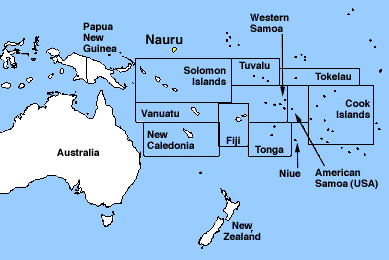
The Republic of Nauru, an incredibly fake-sounding yet real Micronesian country, lost its only plane because corruption wiped out all its shit-brought wealth.
The remote Pacific island state of Nauru had its sole plane seized today, virtually cutting off the island’s residents from the outside world. The tiny island, whose people were once among the richest per capita in the world, had failed to make payments on the aircraft since 2002... The 7,500 residents of Nauru, a 21 square kilometre coral atoll, were once among the world’s wealthiest due to the export of phosphates, mostly from bird droppings. But the reserves are almost exhausted and with earlier wealth squandered through corruption and mismanagement, the country is virtually bankrupt.